
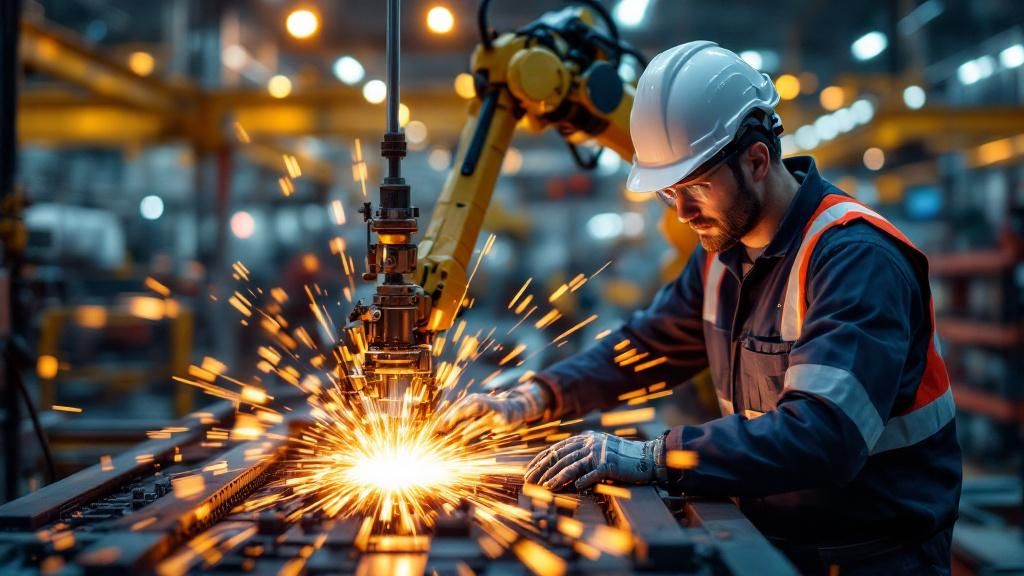
The UK manufacturing industry is witnessing an unprecedented transformation as manufacturing executives allocate significant funding in next-generation automation solutions and extensive skills training initiatives. This deliberate repositioning demonstrates manufacturers’ commitment to enhance productivity, sustain international competitiveness, and safeguard long-term viability. Our investigation reveals the substantial financial commitments driving this sector overhaul, explores the innovative technologies transforming factory floors, and examines how manufacturers are preparing their staff for tomorrow’s demands. Discover what this investment surge means for manufacturing’s long-term direction.
Growth Surge in Automated Systems
The UK production sector has seen an substantial financial dedication towards automation solutions, with spending hitting exceptional amounts in recent years. Major manufacturers across automotive, aerospace, and electronics markets are allocating substantial capital towards robotic systems, artificial intelligence, and advanced manufacturing solutions. This spending increase indicates industry confidence in automation’s potential to boost operational performance, reduce production costs, and raise quality benchmarks. The extent of this investment highlights producers’ understanding that technological innovation is crucial for sustaining competitive edge in an ever more globalised marketplace.
Industry analysts attribute this funding surge to several converging factors, encompassing post-pandemic logistics review, escalating wage expenses, and the urgent imperative for greater manufacturing agility. Companies are focusing on automation systems that provide adaptability and growth capacity, allowing quick response to fluctuating market demands. Investment figures show that manufacturers are going well beyond simply modernising manual procedures but comprehensively restructuring production methodologies. This planned method secures that British manufacturing stays at the leading edge of industrial innovation, placing the sector for long-term expansion and enhanced resilience against forthcoming financial volatility.
Strategic Staff Development Initiatives
Understanding that technological advancement alone cannot drive success, UK manufacturers are investing substantially in broad-based skills development schemes. These initiatives demonstrate a significant change in how the industry supports and develops human capital. By pairing automation deployment with robust training schemes, manufacturers are confirming their workforce can competently manage, sustain, and improve new technologies. This integrated methodology resolves competency deficiencies whilst enhancing worker confidence and involvement in an progressively technology-driven environment.
Skills Training Programmes
Leading suppliers have developed bespoke training academies and structured apprenticeships intended to provide workers with critical digital and technical skills. These programmes cover robotic systems operation, data analysis, information security, and sophisticated coding languages. Investment in instructor-led and online learning platforms provides availability throughout all staff categories. Companies are partnering with educational partners to deliver certifications accepted throughout the sector, improving advancement prospects and employee retention rates considerably.
The financial outlay to professional training surpasses first-stage induction, with companies establishing continuous professional development initiatives. Workers benefit from consistent training prospects to adapt to advancing digital environments and new sector standards. Many organisations make available tuition reimbursement, mentoring schemes, and study leave for continued learning. This continuous dedication showcases manufacturers’ focus on creating long-term advancement opportunities and building a environment of continuous development within their companies.
Partnership with Academic Organisations
UK manufacturers are establishing collaborative relationships with universities and higher education institutions to align curriculum development with sector needs. These collaborations ensure school leavers have practical skills immediately applicable to modern manufacturing environments. Collaborative initiatives include course development, visiting lectures, lab facilities, and resource supply. By engaging directly with educational institutions, manufacturers influence the pipeline of talent entering the sector, addressing anticipated skills shortages in advance.
Additionally, manufacturers sponsor research projects and innovation hubs within higher education institutions, promoting knowledge exchange and technological advancement. Double-degree programmes and industry placements equip students with valuable hands-on experience whilst offering companies priority access to emerging talent. These collaborations strengthen the UK’s position as a global manufacturing hub, maintaining ongoing competitiveness and establishing Britain as an appealing destination for cutting-edge manufacturing investment and skilled labour development.
Economic Impact and Prospects Ahead
The record investment in automation and workforce training is expected to create significant economic benefits across the UK manufacturing sector. Sector specialists anticipate output increases of up to 25% in the coming three years, leading to greater output and enhanced competitiveness in international markets. These advancements are expected to create approximately 15,000 new skilled manufacturing positions whilst reinforcing Britain’s standing as a technology-driven industrial hub. The multiplier effect of this capital injection will probably stimulate growth throughout supply networks and complementary sectors.
Long-term outlooks for UK manufacturing appear decidedly encouraging as businesses position themselves at the leading edge of Industry 4.0 adoption. Companies deploying automation today are setting themselves up to seize fresh commercial prospects and respond swiftly to evolving consumer demands. The combination of artificial intelligence, robotics, and cutting-edge analytics promises to unleash transformative possibilities previously constrained by labour availability and operational constraints. Future-focused manufacturers recognise that sustained competitiveness depends upon relentless innovation progress and employee skill enhancement.
Looking ahead, the drive created through present investment movements points to a significant restructuring of UK manufacturing’s economic contribution. State backing through skills funding and business incentives will likely accelerate adoption rates across SMEs. As automation develops and workforce skills grow, UK manufacturers are poised to regain market share from international competitors. This shift constitutes not just industrial modernization but a strategic reorientation of manufacturing as a foundation of Britain’s future economic prosperity and technology leadership.
