
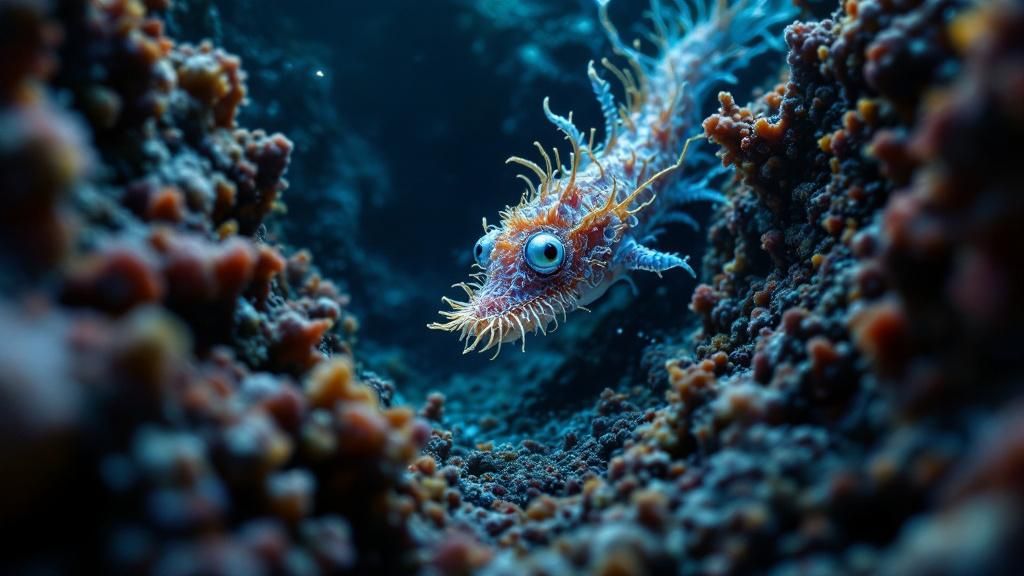
In a notable breakthrough for marine biology, researchers have identified a newly found species lurking in the ocean floor of the world’s deep trenches. This outstanding breakthrough, made during an journey into some of Earth’s most inhospitable environments, reveals yet another remarkable organism adapted to intense pressure and total darkness. The discoveries clarify the little-understood environments thriving kilometres below the surface, challenging our knowledge of life’s adaptability and expanding the record of deep-sea fauna in ways researchers had barely foreseen.
Remarkable Findings in the Mariana Trench
During a landmark expedition to the Mariana Trench, the world’s deepest underwater canyon, scientists discovered a remarkable creature never before documented by science. Located roughly 11,000 metres beneath the surface, this extraordinary organism exhibits specialized characteristics to withstand extreme pressure conditions exceeding 1,000 atmospheres. The discovery was facilitated by advanced submersible technology and sophisticated imaging equipment, allowing researchers to study the creature in its original surroundings for the very first time. This finding represents a major breakthrough in abyssal exploration and underscores the immense unexplored biological diversity of our planet’s most extreme environments.
The newly discovered species displays striking physiological characteristics that challenge conventional understanding of life’s limits. Its light-producing abilities and unusual morphology suggest evolutionary pathways distinctly different from surface-dwelling relatives. Scientists consider this creature represents an entirely separate genus, potentially opening avenues for groundbreaking research into extremophile biology and adaptation mechanisms. The discovery highlights how much still eludes us about our oceans and underscores the vital significance of ongoing underwater research. Each expedition to these distant depths promises further revelations about life’s remarkable ability for survival in Earth’s harshest environments.
Defining Characteristics and Physical Appearance
The newly discovered species displays a striking array of specialised features perfectly suited to its deep-sea habitat. Measuring approximately 30 centimetres in size, this organism possesses a notably compressed body form that enables smooth progression through the extreme pressure zones. Its translucent flesh permits light penetration, whilst its specialised sensory organs sense minute vibrations in the water. The creature displays an unusual colouration pattern, alternating across deep purples and blacks, providing outstanding concealment against the constant obscurity of the trench environment.
Light-Producing Adaptations
One of the most striking features of this deep-sea creature is its ability to produce bioluminescence, a characteristic shared by numerous abyssal organisms. The species produces light through specialised photophores arranged along its ventral surface, employing a intricate chemical process that uses luciferin and luciferase enzymes. Scientists hypothesise that these luminescent structures serve several functions: attracting potential prey, enabling interaction with other members of the species, and potentially evading predators through counter-illumination techniques.
The intensity and colour spectrum of the bioluminescent emissions vary depending on the creature’s metabolic state and surrounding environment. Researchers noted that the animal can control its luminous output with remarkable precision, suggesting advanced neural control processes. This adaptive function constitutes an selective advantage in the demanding abyssal habitat, where optical signalling proves vital despite the apparent endless darkness surrounding this extraordinary creature.
Pressure Management Mechanisms
Surviving at depths surpassing 7,000 metres requires remarkable biological adjustments to withstand pressures approximately 700 times greater than at sea level. The creature’s cell composition incorporates adapted protein structures that maintain membrane stability under intense pressure. Its skeletal framework, composed of bendable cartilage rather than rigid bone, allows the organism to compress and decompress without sustaining structural damage. Additionally, the creature’s tissues contain suspended amino acids and organic compounds that manage osmotic pressure internally.
The specimen’s organs demonstrate remarkable durability, particularly the cardiovascular and nervous systems, which must perform perfectly despite immense external pressure. Researchers found that the creature’s blood contains specialised haemoglobin types capable of transporting oxygen effectively in the oxygen-depleted deep-sea environment. These physiological innovations reflect extensive periods of evolutionary refinement, enabling this species to flourish where most land-based creatures would be immediately crushed. Such findings shed light on the exceptional features of life in the planet’s harshest environments.
Scientific Importance and Research Applications
Comprehending Extreme Adaptation
This newly discovered species represents a crucial addition to our comprehension of extremophile organisms. The creature’s biological adjustments to endure extreme pressure surpassing one thousand atmospheres and near-freezing temperatures offer important understanding into organismal resilience. Scientists can now examine how this organism’s cellular structures, proteins, and metabolic processes function under such extraordinary conditions. These findings may transform our understanding of life’s boundaries and inspire novel biotechnology applications derived from studying these remarkable adaptations.
Significance to Evolutionary Biology
The discovery questions existing evolutionary models and expands our comprehension of biodiversity distribution across Earth’s ecosystems. This species suggests that deep-ocean trenches harbour considerably greater biological diversity than earlier recorded, suggesting that evolutionary processes work in ways we have yet to fully comprehend. Scientists are now able to examine how isolated populations in harsh conditions acquire distinctive traits over millennia. The findings emphasise the requirement of further exploration and propose that numerous unknown species presumably dwell in our world’s most profound depths, substantially reshaping our perspective on global biodiversity.
Future Research Pathways
This revelation has galvanised the academic establishment, driving expanded funding for ocean floor research initiatives and sophisticated technological advancement. Future expeditions will deploy advanced diving vessels and collection apparatus to investigate surrounding abyssal zones methodically. Researchers intend to undertake comprehensive genetic analyses, environmental assessments, and activity monitoring on this species. Furthermore, coordinated global efforts will prioritise creating conservation zones within these delicate environments, ensuring that research advancement progresses alongside ecological protection measures.
